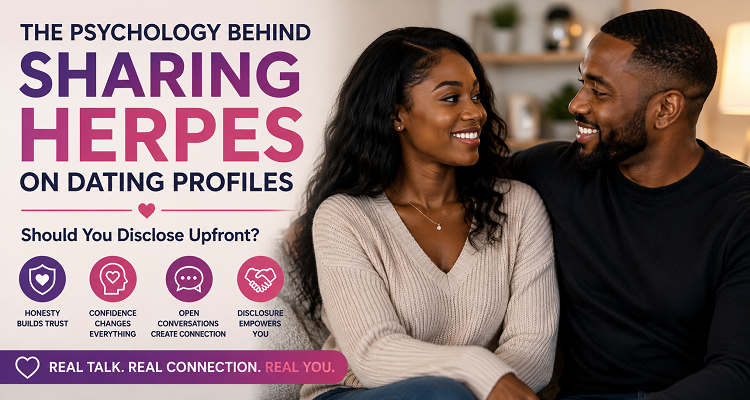
Living with herpes can change how you approach dating, especially when deciding whether to mention HSV in your dating profile or wait until you’ve built trust with someone. It’s a personal decision, and there isn’t one answer that works for everyone.
For some, being open from the start brings peace of mind. Others prefer to wait until a genuine connection develops before discussing their health. Both approaches are valid. The important thing is understanding the psychology behind disclosure so you can make a choice that supports your confidence, privacy, and emotional well-being.
Why Disclosure Feels So Difficult
The biggest challenge isn’t usually herpes itself—it’s the fear of being judged.
Many people worry that disclosure will change how someone sees them. Questions like “Will they still be interested?” or “Should I tell them now or later?” are common, especially after a new diagnosis.
Psychologists describe this as anticipatory rejection—expecting a negative outcome before it happens. When people assume rejection is inevitable, they often experience anxiety long before any real conversation takes place.
The good news is that reality is often kinder than our fears. Many people report that once they disclose, they feel relieved because they no longer have to worry about hiding part of themselves.
The Reality of Rejection
No one enjoys rejection, but it’s part of dating for everyone.
People end relationships or decline second dates for countless reasons, including personality differences, incompatible lifestyles, conflicting goals, or lack of chemistry. HSV is only one factor among many.
One helpful mindset shift is remembering that disclosure isn’t asking someone for approval. It’s providing honest information so both people can make informed decisions.
That perspective changes the conversation from fear to mutual respect.
Should You Mention Herpes on Your Dating Profile?
This is one of the most common questions among people living with HSV.
Some people include herpes in their profile because they value complete transparency. Others feel that medical information belongs in a private conversation after trust begins to develop.
Neither approach is right nor wrong.
Public Disclosure May Be Right If You:
- Prefer complete honesty from the beginning.
- Want to avoid stressful disclosure conversations later.
- Feel comfortable discussing HSV openly.
- Want to attract people who appreciate transparency.
Private Disclosure May Be Better If You:
- Value personal privacy.
- Prefer to establish trust first.
- Feel uncomfortable sharing health information publicly.
- Believe HSV doesn’t define who you are.
Whatever you choose, honesty before physical intimacy remains the most important principle.
Why Some People Choose Openness
People who mention HSV on their profile often describe three major benefits.
Less Anxiety
Knowing that potential matches already understand your situation removes the pressure of wondering when to disclose. Conversations can develop naturally without worrying about “the right moment.”
Better Quality Conversations
People who continue talking after reading your profile are often more open-minded and interested in getting to know you as a person. Instead of repeatedly explaining your diagnosis, you can focus on shared interests and relationship goals.
Greater Confidence
Many people say that being open helped them stop viewing HSV as a secret. Rather than hiding an important part of their life, they began seeing themselves as honest, responsible, and emotionally mature.
Why Others Prefer Private Disclosure
Many people decide not to mention HSV publicly, and their reasons are equally understandable.
Privacy is often the biggest consideration. A dating profile may be viewed by coworkers, acquaintances, or people outside the dating community. Some simply prefer discussing personal health after trust has been established.
Waiting also allows someone to be known for their personality, values, and interests before introducing a medical condition.
For these individuals, disclosure becomes part of building intimacy rather than the first thing someone learns.
The Psychology of Stigma
The emotional impact of herpes is often driven more by stigma than by the condition itself.
According to the World Health Organization (WHO), billions of people worldwide live with HSV-1, while HSV-2 is also common. Despite this, misconceptions continue to influence public attitudes.
The Centers for Disease Control and Prevention (CDC) notes that many people with herpes have mild symptoms or don’t realize they’re infected. This highlights how widespread HSV is compared with public perception.
Unfortunately, jokes, stereotypes, and misinformation can cause people to internalize shame that isn’t supported by medical facts.
Learning accurate information is often the first step toward rebuilding confidence.
What Relationship Experts Say
Successful relationships depend far more on communication than perfection.
Relationship researcher Dr John Gottman has found that trust, emotional responsiveness, and honest conversations are among the strongest predictors of long-term relationship success.
These qualities become especially valuable when discussing sexual health.
Many therapists also encourage approaching disclosure with confidence rather than apology. Presenting HSV as one aspect of your life—not your identity—often creates a more balanced and reassuring conversation.
Honesty Builds Emotional Intimacy
Talking about HSV requires vulnerability, and vulnerability often strengthens relationships.
Instead of avoiding difficult conversations, couples who communicate openly tend to develop greater trust and emotional closeness.
A simple, confident approach usually works best:
“I like being honest before relationships become physical. I have herpes, I manage it responsibly, and I’m happy to answer any questions.”
This approach communicates responsibility without shame.
Confidence Matters More Than Perfection
Many people accidentally communicate embarrassment instead of confidence.
Compare these two statements:
“I’m sorry. I have herpes, and I understand if you don’t want to see me anymore.”
Versus:
“I believe honesty is important. I have HSV, I manage it responsibly, and I wanted to share that before we become intimate.”
The information is the same, but the emotional tone is very different.
Confidence doesn’t guarantee acceptance, but it often encourages calmer, more respectful conversations.
Learning from the HSV Community
Many people regain confidence through HSV support groups and dating communities.
Common experiences include:
- Feeling relieved after the first disclosure.
- Discovering acceptance is more common than expected.
- Learning better communication skills.
- Meeting partners who value honesty.
- Realizing HSV doesn’t define their future.
These shared experiences remind people that they are far from alone.
Dealing with Negative Reactions
Not everyone will respond positively, and that’s okay.
Sometimes a negative reaction reflects misinformation rather than personal rejection. Other times, someone simply decides the relationship isn’t right for them.
Healthy ways to respond include:
- Remaining calm.
- Respecting their decision.
- Avoiding arguments.
- Continuing to value yourself.
- Looking for support from trusted friends or HSV communities if needed.
Rejection is disappointing, but it doesn’t determine your worth or your future relationships.
Dating Beyond the Diagnosis
People living with HSV build loving relationships every day.
Long-term relationship success depends on qualities like trust, communication, kindness, emotional safety, and shared values—not simply medical history.
Many couples even describe herpes disclosure as an important milestone because it encouraged honest conversations much earlier than they might otherwise have had.
Breaking the Cycle of Stigma
Every respectful conversation about HSV helps reduce stigma.
Whether you choose public or private disclosure, speaking openly and accurately challenges myths and encourages healthier discussions about sexual health.
Your diagnosis is only one part of your story. It doesn’t define your personality, your future, or your ability to build a happy relationship.
Frequently Asked Questions
Should I include herpes on my dating profile?
That depends on your comfort level. Some people value complete transparency, while others prefer discussing HSV privately after building trust. Both approaches are valid.
When should I disclose herpes?
Most health professionals recommend discussing HSV before sexual intimacy so both people can make informed decisions.
Does disclosure always lead to rejection?
No. Many people find that honesty is appreciated, especially when it’s communicated calmly and confidently.
Can people with herpes have successful relationships?
Absolutely. Millions of people living with HSV have healthy dating lives, committed relationships, and marriages.
Final Thoughts
Sharing herpes on a dating profile is a personal decision rather than a universal rule. Some people feel empowered by being open from the start, while others prefer private conversations after trust develops.
The healthiest choice is the one that supports both honesty and emotional well-being. Whether disclosure happens on your profile or later, confidence, accurate information, and respectful communication create the strongest foundation for lasting relationships.
Ultimately, the right partner won’t define you by a diagnosis. They’ll value the honesty, trust, and authenticity you bring to the relationship.


One thought on “The Psychology Behind Sharing Herpes on Dating Profiles”
Comments are closed.