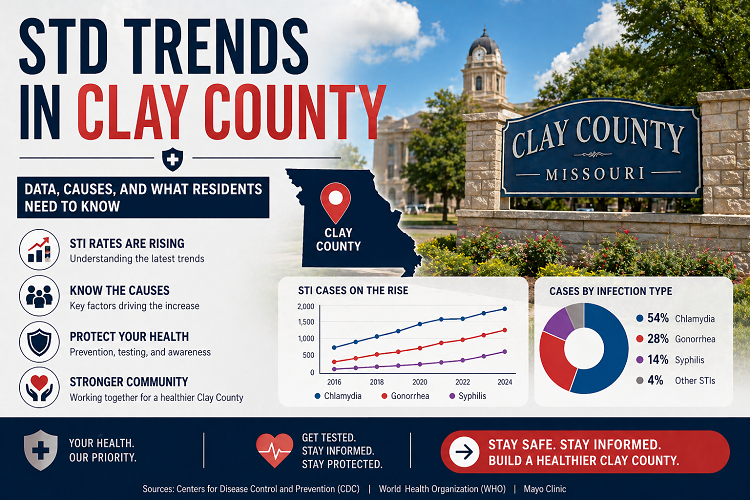
Sexually transmitted infections (STIs) have been rising across many parts of the United States, and Clay County is no exception. Understanding what’s driving this trend and how it affects individuals, relationships, and public health is essential for making informed decisions.
This guide presents a data-driven, evidence-based overview of STI trends in Clay County, combining national research, regional patterns, and expert-backed insights. It also outlines practical steps residents can take to protect themselves and build safer, more informed relationships.
Understanding the Rise in STIs
Across the U.S., STI rates have increased steadily over the past decade. According to the Centers for Disease Control and Prevention, reported cases of chlamydia, gonorrhea, and syphilis have all shown significant growth in recent surveillance reports.
Key National Trends
- Chlamydia remains the most commonly reported STI
- Gonorrhea cases have increased notably in recent years
- Syphilis has seen a resurgence, including congenital cases
Local patterns in areas like Clay County often reflect these broader trends, especially in suburban and semi-urban regions.
A Data Snapshot: How STI Rates Typically Trend
If visualized in a chart, STI trends over recent years would show:
- A steady upward line for gonorrhea cases
- A gradual increase in chlamydia cases
- A sharper rise in syphilis rates
These patterns highlight the importance of awareness, testing, and prevention.
Why Are STI Rates Increasing?
1. Reduced Routine Testing
The World Health Organization emphasizes that early detection is essential. However, many individuals do not get tested regularly, allowing infections to go undetected.
2. Asymptomatic Infections
Many STIs do not show symptoms. This leads to:
- Unintentional transmission
- Delayed diagnosis
- Continued spread within communities
3. Changing Dating Behaviors
Modern social dynamics include:
- Increased use of digital platforms
- Broader social networks
- Faster-paced relationship formation
These trends can increase exposure risk without proper precautions.
4. Communication Barriers
Experts highlight that:
- Conversations about sexual health are often avoided
- Fear of judgment limits openness
- Misunderstandings about STIs remain common
5. Healthcare Access Limitations
In some areas:
- Clinics may be limited
- Testing availability varies
- Costs may discourage routine screening
Read more: Dating, Sexuality, & Wellness: The Journey of Lesbians with Herpes
Expert Insight: Communication and Prevention
Guidance from the Mayo Clinic shows that clear communication between partners significantly reduces risk.
Key takeaways from health experts:
- Honest discussions improve trust
- Shared awareness supports better decisions
- Education leads to safer outcomes
Impact on Relationships and Dating
Rising STI rates are influencing relationship dynamics.
Increased Awareness
More individuals now:
- Discuss testing history
- Prioritize transparency
- Value informed decision-making
Shift Toward Informed Dating Environments
People often prefer:
- Open and honest communication
- Communities that support awareness
- Reduced stigma around health discussions
Emotional Considerations
STI-related conversations influence:
- Trust
- Comfort levels
- Long-term relationship stability
Local Context: Clay County
Clay County reflects broader national patterns, with local factors influencing trends.
Key Influences
- Population movement between nearby regions
- Young adult demographics
- Social attitudes toward dating and health
Access to Local Resources
Residents should be aware of:
- Local health clinics
- Community testing programs
- Educational outreach initiatives
Data Perspective: What Trends Suggest
By Age Group
- Higher reported rates among individuals aged 18–34
- Increasing awareness among older populations
By Infection Type
- Chlamydia: most commonly reported
- Gonorrhea: fastest increase
- Herpes: widespread but often underdiagnosed
Detection Trends
- Many cases remain undiagnosed
- Increased testing often reveals higher prevalence
Prevention Strategies
Regular Testing
Routine screening is one of the most effective prevention tools.
Open Communication
Discuss:
- Health status
- Testing history
- Expectations
Protective Measures
Consistent use of protection reduces transmission risk.
Education
Understanding STIs helps reduce fear and misinformation.
Reducing Stigma Through Awareness
Public health organizations emphasize:
- STIs are medical conditions
- Education improves understanding
- Open dialogue leads to better outcomes
Practical Steps for Clay County Residents
Stay Informed
Follow trusted sources such as:
- Centers for Disease Control and Prevention
- World Health Organization
Test Regularly
Testing remains essential, even without symptoms.
Choose Supportive Environments
Engage in spaces that encourage informed and respectful communication.
FAQs
Why are STI rates increasing in Clay County?
Rising rates are linked to reduced testing, asymptomatic infections, evolving social behaviors, and communication gaps.
Are STIs common?
Yes. Public health data shows they are widespread across all populations.
How can risk be reduced?
Regular testing, communication, and protective measures are key.
Can relationships remain healthy?
Yes. With proper awareness and communication, individuals can maintain strong and stable relationships.
Author
Bond K. – Health and Relationship Researcher
Focused on STI awareness, behavioral trends, and relationship dynamics, Raju provides practical insights to support informed decisions.
Editorial Sources
- Centers for Disease Control and Prevention
- World Health Organization
- Mayo Clinic
Read more: Cat Sneezes Decoded: Signs of Feline Herpes or Chlamydia